




The Night Morristown Burned: January 29, 1900
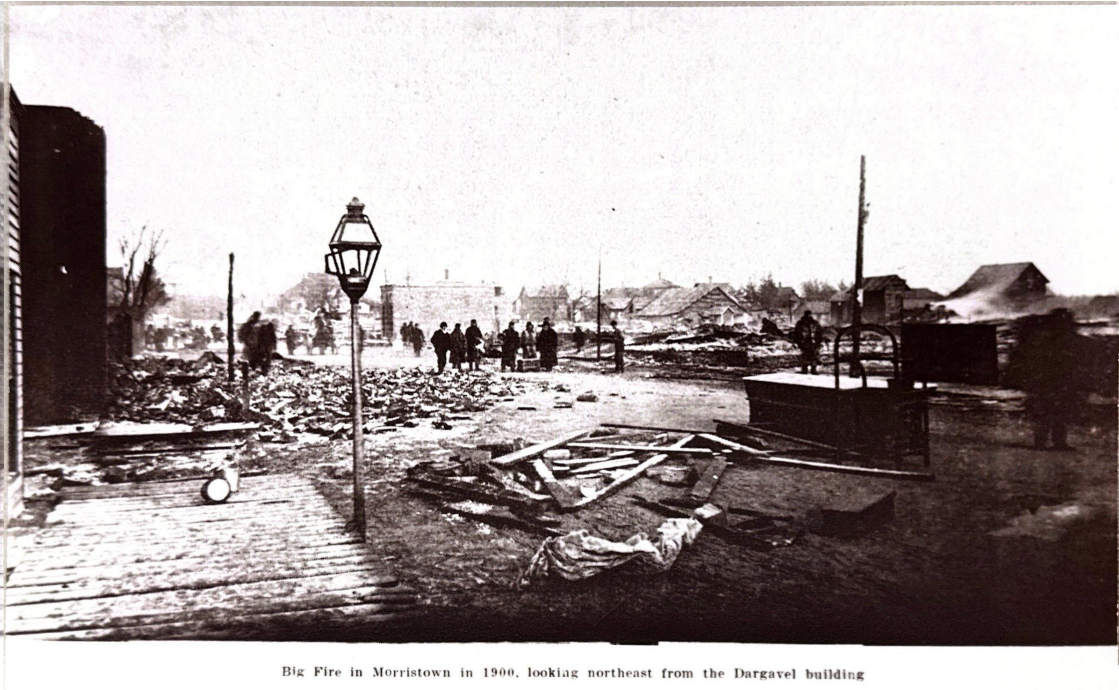
On a brutal Monday evening in the winter of 1900, Morristown endured one of the most calamitous events in its history. Shortly after 6 p.m., flames broke out in the rear of Filmer’s Drug Store, midway along Division Street, though the cause was never publicized. Mr. and Mrs. Filmer were upstairs finishing supper when the first cry of fire rang out. They reached the street safely, but their building was quickly consumed, flames already leaping toward neighboring storefronts.
The night could not have been more unforgiving. Temperatures plunged to –12°F, and a strong northwesterly wind roared through town, driving the blaze faster than anyone could hope to contain. Soon, the heart of Morristown’s business district glowed an ominous orange against the winter darkness.
With no waterworks and only a bucket brigade to stand between the town and destruction, Morristown’s leaders sent desperate telephone calls to Faribault and Waterville. Both communities answered without hesitation.
Faribault received the call at 7:20 p.m. and dispatched its “Chemical Engine,” hitched to four of the livery’s strongest horses. A crew of four set out into the bitter night. With winds howling and the rough, uneven roads stretching nearly ten miles, the journey proved arduous. Nearing Morristown, a wheel on the engine suddenly seized and refused to turn, further delaying them. They did not reach the fire until about 11 p.m., by which time it was largely under control.
Waterville’s response proved far more timely. Their hand‑pump engine was loaded onto a freight train and arrived around 8 p.m. In the biting air, the Waterville crew worked with relentless determination, managing to save several key buildings.
By midnight, the worst of the flames had been beaten back, but the destruction was staggering. Nearly two‑thirds of Morristown’s business district—about 20 establishments spanning two and a half blocks—lay in charred ruins. Among them were the Morristown Press office, the Bank of Morristown, the Central Hotel and barn, the post office, a millinery, a harness shop, a meat market, and several residences. Filmer’s Drug Store was gutted, its salvaged stock frozen solid in the bitter air, leaving Mr. and Mrs. Filmer with almost nothing. Only four buildings remained standing, three of them badly damaged.
Tuesday morning revealed a pitiful picture. Main and Division streets lay strewn with the remnants of people’s lives—rocking chairs, sofas, clocks, books, papers, bedding, parlor ornaments, kitchen tables, piano stools, and bedroom furniture—heaped in chaotic piles. Some families escaped with nothing more than the clothes on their backs. The Faribault Journal reported that Mr. and Mrs. Hanck and Mrs. Richter had packed trunks for a trip to Michigan; by sheer luck, those trunks were already at the depot and survived.
Read some of the original news coverage right here:
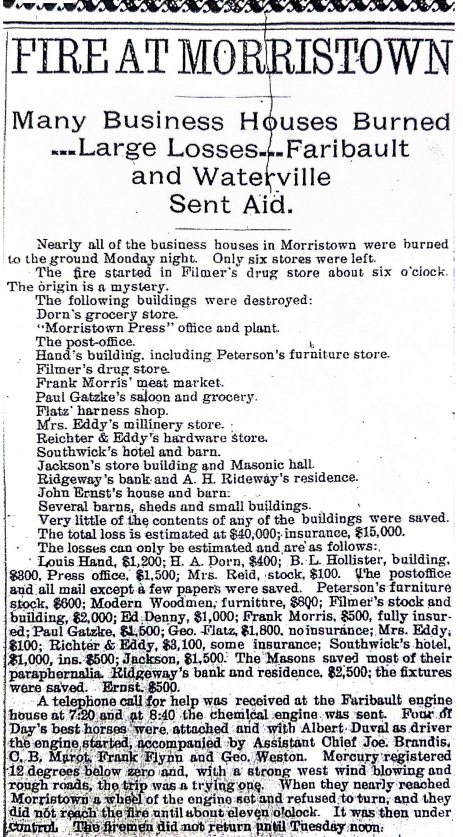
Yet amid the ashes, gratitude took root. The same newspaper reported, “The Waterville boys say their pump never did better work at home than it did for us. Had they not saved the Dartnall building, the Laufenburger building across the street would surely have gone. Take off your hats to the Waterville boys.” The newspaper urged the village council to “pass an ordinance at once prohibiting any more frame buildings in the business part of town. Brick is better, cheaper and safer. Let’s have brick or nothing.” It also remarked, “Yes, there were drunks and thieves galore on hand Monday night. There always are at such times.”
All told, it was a night not soon forgotten. The Morristown fire of 1900 remains one of Rice County’s most dramatic and destructive events—a night when flames and bitter winter tested a community, and neighboring towns answered the call.
–Jeff Sauve, Northfield, Minn.