



The Founding Mothers of the Paradise
This article is from the 2014 edition of the RCHS Winter Newsletter. RCHS is working to share more of our content digitally.
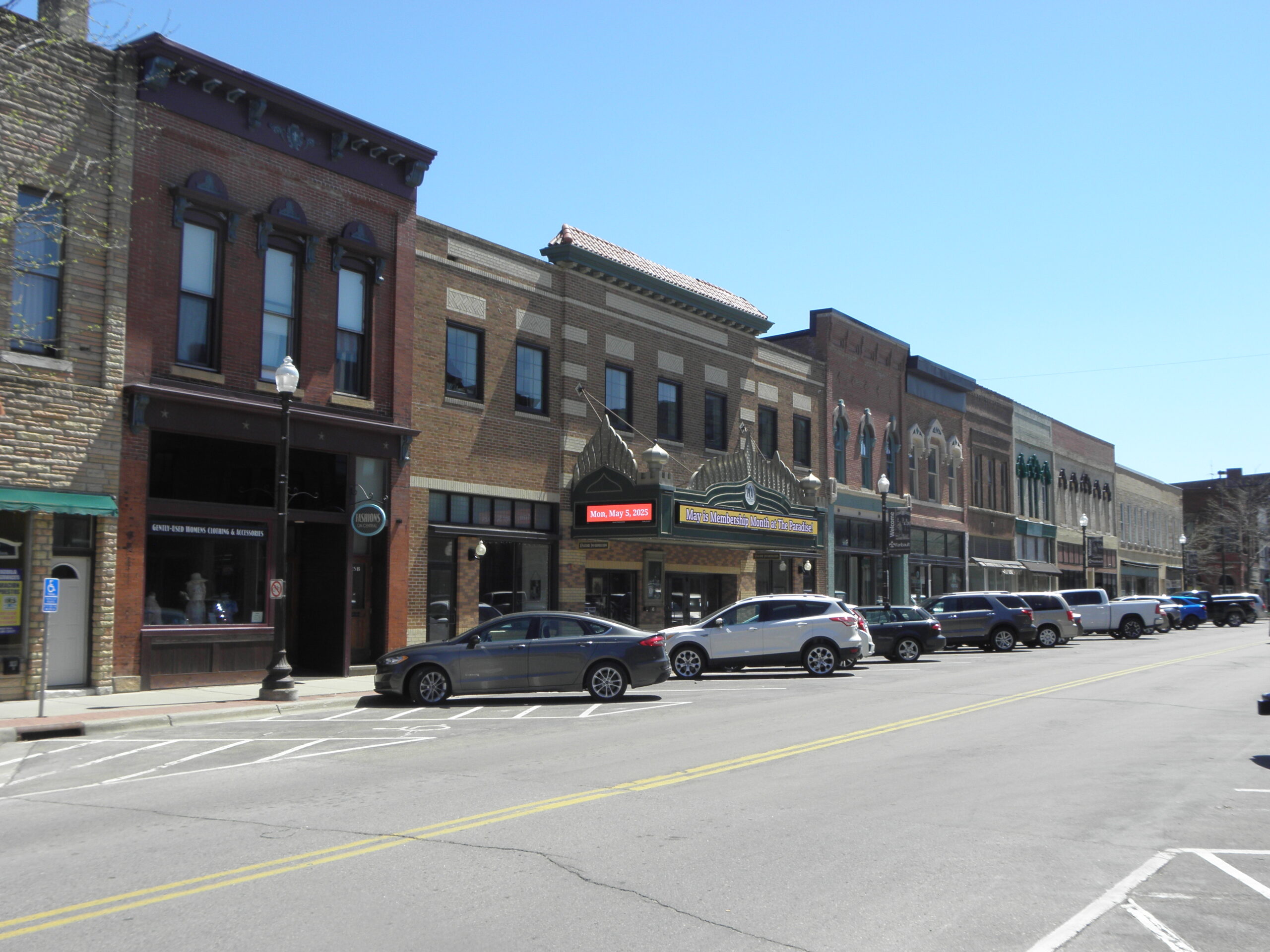
A group of Faribault women could be said to be “the founding mothers of paradise” – as in the Paradise Center for the Arts. Like most things in life the founding of the PCA is complicated, but without the financially sound and community-supported Faribault Arts Center, the purchase of the old Paradise Theater on Central Avenue in 2004 to convert into an art center would have been longer in developing or may not have happened at all.
The Faribault Art Center was the organization that had the financial stability and backing of the community that enabled it to get a mortgage from the Faribault State Bank to purchase the old theater in early 2004. The Faribault Area Community Theater (FACT) and Merlin Players were partners with FAC in plans to convert the movie theater into a community arts center, but the FAC originally bought the building.
In 2005, the Paradise Center for the Arts incorporated with a board of directors to oversee the beginning renovations of the movie theater. In 2006, the FAC and FACT Board of Directors agree to merge their organizations into the Paradise Center for the Arts.
Founding steps
It all began back in 1956 with Frieda Lord. She was 45-years-old and operated a popular beauty shop in Faribault during the day and cared for her five children during the evening. The stress of all her responsibility took a toll on her health. Her weight started to drop as a result, Lord reported in a March, 15, 1994 article in the Faribault Daily News.
Her doctor told her to find a hobby to get out of the house and away from the worries of her children and business for one night a week. An evening oil painting class was advertised in the newspaper through the Faribault Recreational Department. She showed up and enjoyed it. However, only six students had attended the class that first night, and 10 were needed for it to continue.
“We talked the instructor into a second class to show us how to start painting once a sketch was completed. After that, I invited people over to my house to paint around my big kitchen table,” Lord said in the 1994 newspaper article.
The Faribault Art Center’s founding had its root in those kitchen table painting sessions. The four to six women who came each week seem to never doubt they could do art, if given instructions on how to do it.
The late Marge Keller was one of those women. She recalled in a Feb. 17, 2007 Faribault Daily News article that she was ironing clothes one day in 1957 and had the newspaper spread out in front of her as she worked. She spotted an article on a group that gathered around a kitchen table once a week to do oil painting.
“It intrigued me. I’d never done any artwork,” Keller stated in the newspaper interview. “I wasn’t really encouraged to as I grew up, but this painting group sounded like fun to me.” She soon joined the group.
Members of the kitchen-table painters formed “The Faribault Art Center” at the end of 1957. Mary Mulcahy was elected its first president and Lord was its secretary. Mulcahy was the classified ad manager for the Faribault Daily News for many years before her retirement.
Charlotte Van Guilder was another of the kitchen-table artist. She was a commercial artist in St. Paul before she married Norman Van Guilder and moved to Faribault. She lived in Faribault 24 years and helped developed the art center before retiring to McAllen, Texas. She specialized in water color and oil paintings that captured the historical building and businesses in Faribault.
Mildred B. Anderson and Elaine Campbell were also among the early painters that helped build the FAC. They were interviewed in a June 2001 Daily News article. They believed, according to the article, that no one is too old or too young to discover the creativity within them, and that art is for everyone, young and old.
Once the kitchen-table painters formed the Faribault Art Center in 1957, they found local instructors for both adult and children’s classes. A space to hold those classes was at first found in the Arlington Hotel lobby, then in the Ochs Department Store, later at Faribault City Hall, as well as the old McKinley School building.
For a while, the art center shared space with woodcarver Ivan Whillock, in the basement of 217 Central Ave., before he moved to his current studio at 122 NE First Ave. At that time, the FAC moved into a store-front space at 210 Central Ave., a location it occupied for 15 years before its merger with the Paradise Center for the Arts in 2005.
Early project
In 1961, the fledgling FAC took on a project to renovate a room in the upstairs of Buckham Memorial Library to convert into “The Little Art Gallery” to provide visual art all Faribault residents could see when visiting the library. It opened on Feb. 5, 1961.
In 1964 (50 years ago), the group incorporated as a non-profit organization. This move enabled the organization to do fundraising to expand classes and pay instructors from Carleton College in Northfield, including nationally-famous Carleton Art Professor Dean Warnholtz, and to hold art exhibits. An annual member art show in the Faribault State Bank lobby began in the early 1960s.
“I’d get so excited about taking classes and learning new techniques,” Keller said in the 2007 Daily News article, when she was 90 years old. “It’s been a great hobby for me, and what I’m so proud of is that my daughter and grandchildren are artists. When we get together, we have such fund talking about our art and works of artists we’ve seen.”
Keller, who died in 2012, was the only kitchen-table painter who lived to see the opening of the Paradise Center for the Arts and attended its grand opening on Oct. 20, 2007.
“My life certainly has been enriched because of the Faribault Art Center, and I can see so many lives being enriched by all the Paradise Center for the Arts will have to offer,” Keller remarked in the Feb. 14, 2007 newspaper article.
The mission of the Faribault Art Center was: “to develop and enhance the artistic and creative expression of the Faribault Community.” The mission of the FAC continues today with the visual, musical and dramatic arts programs of the Paradise Center for the Arts.
—Pauline Schreiber, RCHS Board Member and Volunteer