




Walcott Township
This article is from the 2017 edition of the RCHS Summer Newsletter. RCHS is working to share more of our content digitally.
Walcott was a booming community in Rice County 115 years ago with a large three-story flour mill, cooper mill and creamery. Today, there is little apparent evidence of the once-flourishing community-of-promise that sprawled around the area of today’s County Road 19 Bridge over the Straight River, near the junction of Glynview Trail and 240th Street East, south of Faribault.
Walcott Township is connected to Faribault by the Straight River and railroad lines, which runs through both, as well as the history of the Walcott flour mill.
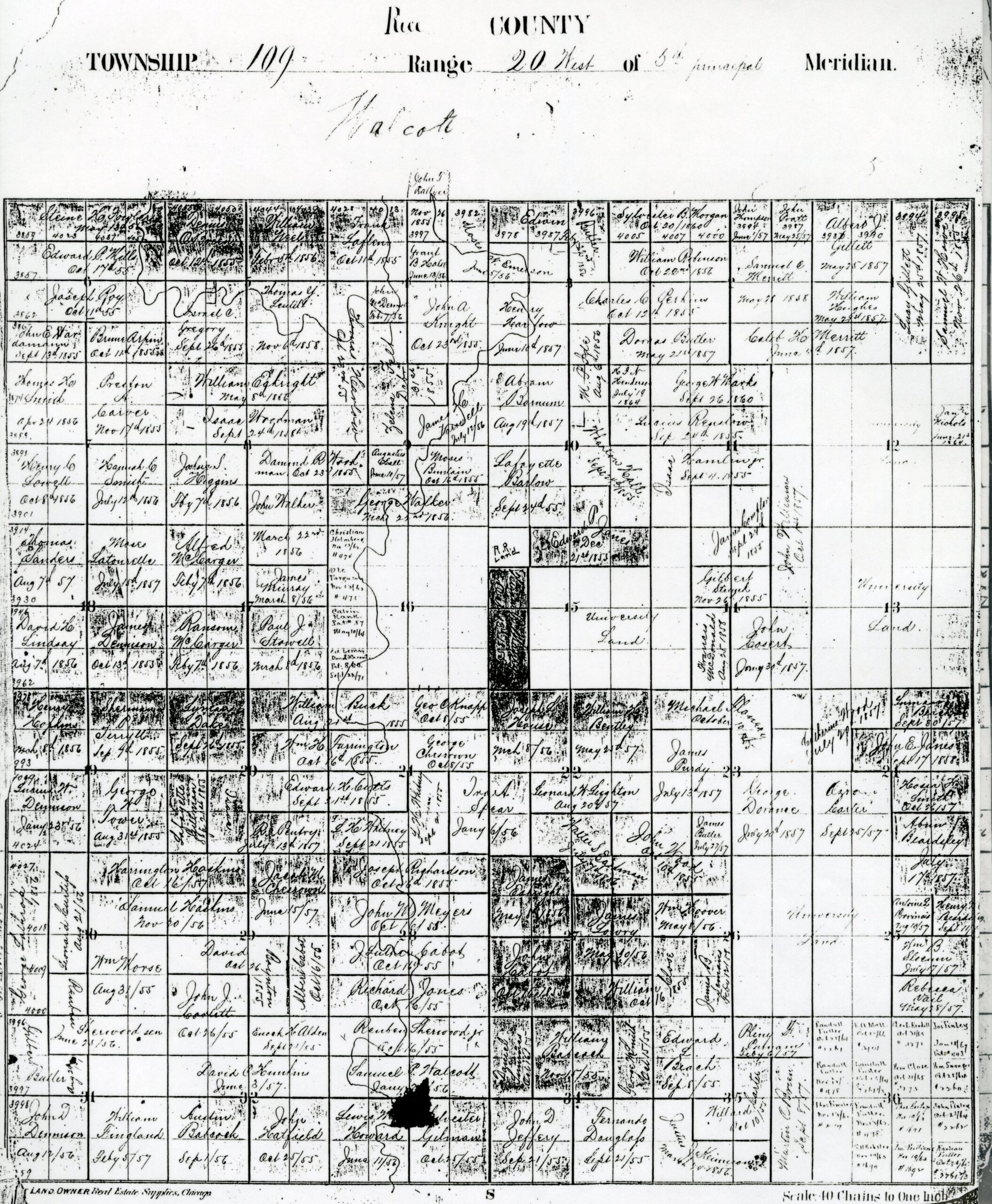
Walcott Township’s first settler is recorded as Edward H. Cutts, who came from Vermont in 1853. He staked a claim in section 20 and 21 and built a cabin on it the following year. By 1855, most of the land in Walcott Township was likewise claimed, according to an early county history book. In a very short period of time, settlers poured into the township, mostly to farm, turning its prairie or wood-lots into fields for crops.
The township draws its name from Samuel Walcott from Massachusetts, who came in 1858 and claimed parts of Section 20, 21, 28, and 29, and was inspired to layout the community of “Walcott.” One county history book stated: “There was nothing small about plans (for Walcott), however, they never progressed enough to be recorded as a platted community.”
Yet, the Straight River’s course that flowed through the planned community of Walcott offered “water power” for a mill. And, in the early 1870s, Donald Grant and Edward LaMay constructed what was a feed and flour mill on the Straight River, near today’s junction of Glynview Trail and 240th Street East. At first there was a 10-foot fall in the water to turn the wheel for the mill, which was later increased to a 12-foot fall.
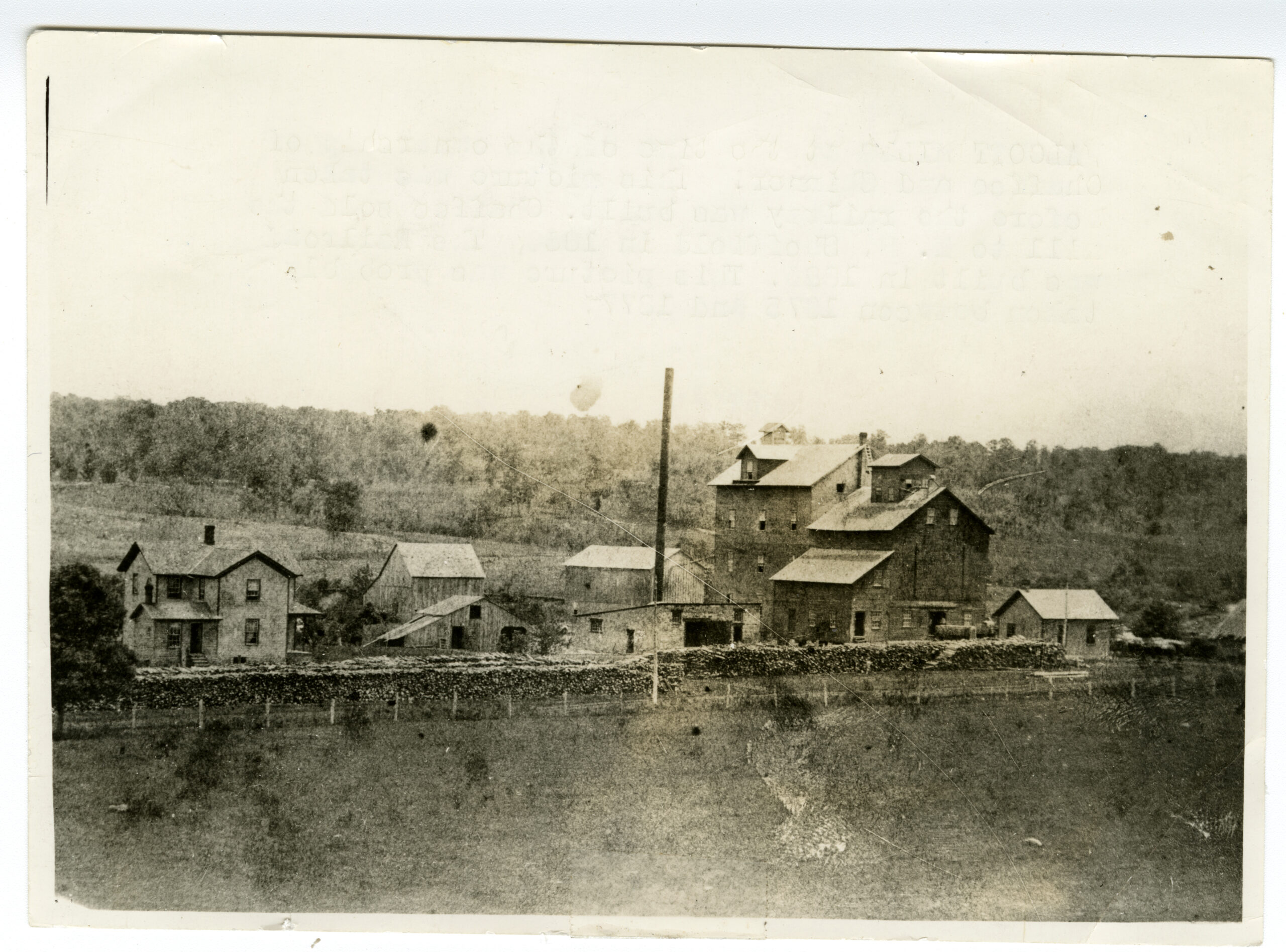

By 1873, the mill was producing 80 barrels of flour a day, according to an early history book. But it was a time when water-powered mills were being upgraded to steam-powered mills. But being that the mill had proved very productive – and having a planned route for a rail line nearby (line built in 1885 by Milwaukee Railroad) – it attracted new buyers. M. B. Sheffield, George E. Skinner, and Henry Chaffee purchased the mill and in 1874, and created a new firm, the Walcott Mill Co.
One of the first things the new buyers did was add a 90-horse steam engine to power the mill at a cost of $24,000. Steam power was a step above water power, since the flow of water on the Straight River fluctuated a lot. Steam power gave an even flow of energy through the year to power the mill stones.
Nearby the mill
Charles Smith had built a hotel in “Walcott” shortly after Samuel Walcott planned out his dream community. The hotel was on a stage coach line between Faribault and Owatonna, but not much else got built until the days of the Walcott mill.
One Faribault Daily News article from 1939, on the history topic of Walcott, states: “The history of Walcott mill is the history of Walcott village – its reason for being. Likewise, the history of the village is bound up in that of Faribault…”
M.B. Sheffield, one of the owners of what was incorporated as the Walcott Mill Co. in 1874, eventually brought out partners and by 1880, was the sole owner. His son, B.B. Sheffield, became manager of the booming Walcott flour mill. When it burned in 1885, M.B. Sheffield purchased what was called the Polar Mill in Faribault and what was salvageable of the Walcott Mill, brought it to Faribault and built up what would eventually become the. H.H. King Company Mill.
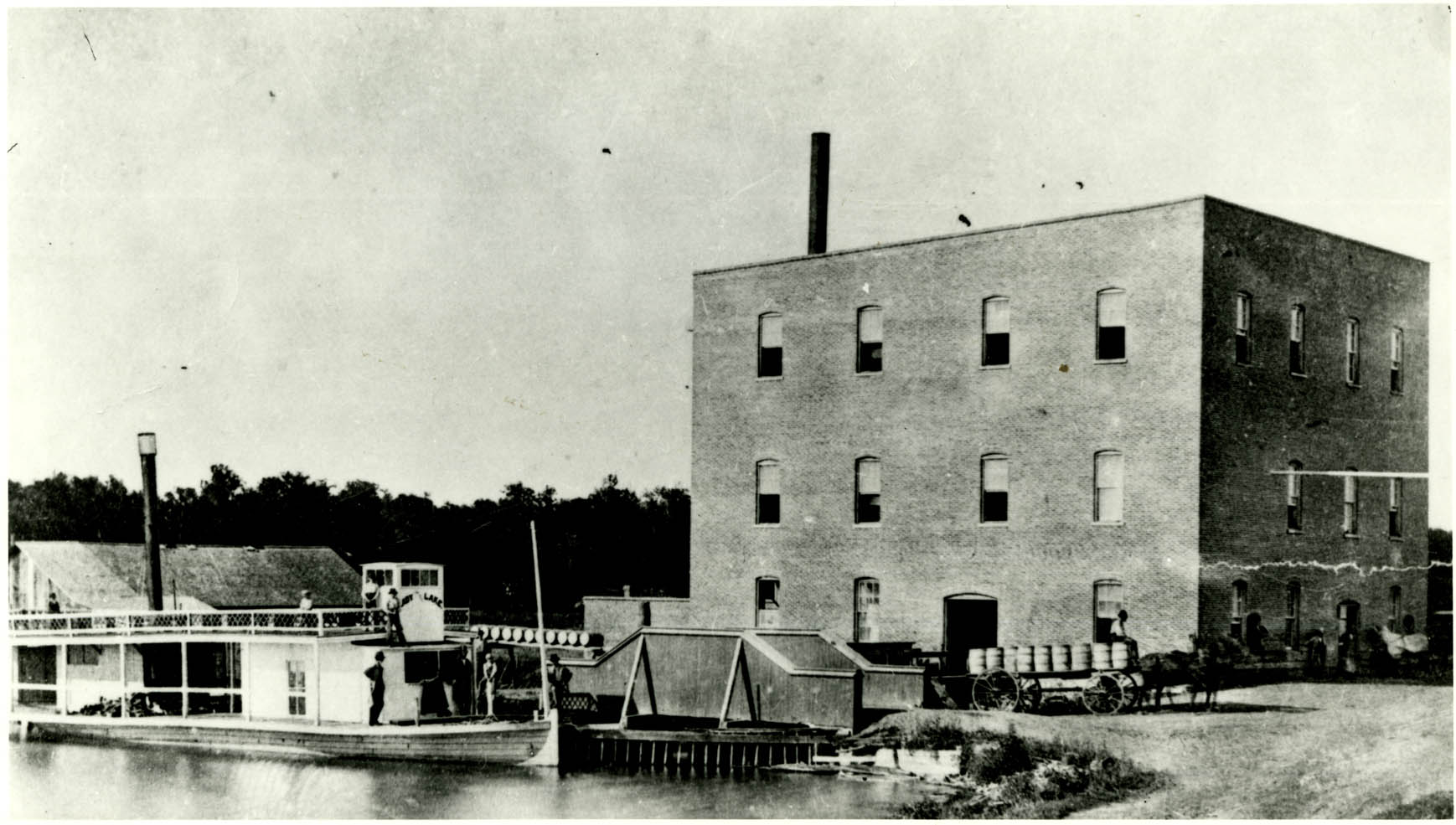
Faribault’s King Mill produced Gold Mine Flour from the 1880s until 1956 when the flour mill closed. Parts of King Mill buildings were used for grain storage until June 19, 1975 when a fire destroyed what was left of the King Mill structures. Today, only the Rice County Park around the King Mill Dam at Seventh Street Northwest and Western Avenue remain to mark the history of flour milling and the H.H. King Flour Mill.
– Pauline Schreiber, RCHS volunteer